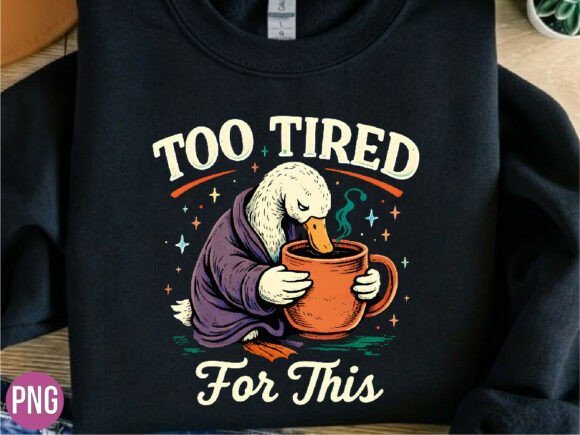
Mastering the Too Tired Duck Coffee Morning Shirt PNG for Professional Results
The charm of relatable, whimsical designs has taken the print-on-demand and DIY crafting worlds by storm. At the center of this trend is the Too Tired Duck Coffee Morning Shirt PNG, a design that perfectly captures the universal sentiment of needing caffeine before facing the day. For creators, entrepreneurs, and hobbyists, this digital asset offers a quick route to producing engaging merchandise. However, possessing a high-quality file is only half the battle. Many users stumble not because the design lacks appeal, but because they misunderstand the technical requirements of working with digital graphics. Avoiding common pitfalls in file handling, software compatibility, and application methods can mean the difference between a amateur-looking product and a professional-grade item that sells.
Understanding the Digital Asset
Before diving into production, it is crucial to understand exactly what you are purchasing. The Too Tired Duck Coffee Morning Shirt PNG is not a physical shirt, nor is it an editable vector file like an SVG or AI. It is a raster image file, specifically a Portable Network Graphics (PNG) format. This distinction matters immensely for your workflow. A PNG at 300 DPI (dots per inch) with a transparent background is the industry standard for sublimation, direct-to-garment (DTG) printing, and iron-on transfers. The transparency allows the design to sit seamlessly on any colored fabric or substrate without a white box surrounding the duck illustration.
Many beginners mistakenly believe that any image found online can be printed directly onto a t-shirt. This misconception leads to pixelated, blurry, or poorly aligned prints. The value of a dedicated digital design file lies in its resolution and pre-prepared transparency. When you download this specific ZIP folder, you are receiving a file optimized for clarity and ease of use. Recognizing this helps set realistic expectations about what editing you can and cannot do. You cannot infinitely enlarge a PNG without losing quality, unlike a vector file. Therefore, understanding the limitations of the format is the first step toward successful creation.
Common Mistakes in File Handling and Extraction
One of the most frequent errors occurs immediately after purchase: failing to properly extract the files. The product arrives as a single ZIP folder. Some users attempt to open or import the PNG directly from within the compressed ZIP file using their design software. This often results in error messages, corrupted data, or the software failing to recognize the transparent background. Always unzip and extract the file to a local folder on your computer before attempting to use it. This simple step ensures the file integrity remains intact and your design software can read the metadata correctly.
Another overlooked detail is ignoring the DPI specification. While screens display images at 72 DPI, printing requires 300 DPI for sharpness. If you accidentally resave the file in a program that defaults to web resolution, you will degrade the print quality. Always check your software settings to ensure it maintains the original 300 DPI resolution when importing the Too Tired Duck Coffee Morning Shirt PNG. Preserving this resolution is non-negotiable for professional results, especially on larger items like pillows or wall decor where pixelation becomes obvious to the naked eye.
Software Compatibility and Editing Limits
A significant misunderstanding among new creators is the assumption that "PNG" means "editable." It does not. A PNG is a flat image. You cannot change the color of the duck’s coffee cup or edit the text font unless you have the original layered source file, which is not included in this package. Attempting to edit the text in basic photo viewers will fail. Instead, you must use design software that supports layering, such as Photoshop, Canva, or Silhouette Studio, to place the PNG over other elements.
Furthermore, ensure your chosen software actually supports transparent backgrounds. Some basic or older programs automatically fill transparent areas with white or black. Before committing to a large print run, test the file in your specific workflow. If you are using cutting machines like Cricut or Silhouette for heat transfer vinyl (HTV), note that you cannot cut a PNG directly. You would need to print the PNG onto printable HTV paper or use a different file format for cutting. Confusing print-ready files with cut-ready files is a costly mistake that wastes materials and time.
Choosing the Right Application Method
The versatility of this design is one of its strongest assets, suitable for t-shirts, mugs, stickers, tumblers, and more. However, each application method has specific requirements. For sublimation on mugs or polyester shirts, the PNG works beautifully because the ink bonds with the fibers. For cotton t-shirts using iron-on transfers, you must mirror the image before printing if you are using transfer paper that requires it. Failing to mirror the text "Too Tired" will result in backward lettering on the final product, rendering it unsellable.
When applying the design to dark fabrics, standard transparent PNGs may not show up vibrantly unless you use a specific transfer method that includes a white underbase. Many beginners print a transparent PNG onto light transfer paper and apply it to a black shirt, only to find the colors look washed out. In such cases, consider using a dark garment transfer paper or adjusting your design workflow to include a white background layer if the transfer method demands it. Understanding the interaction between the digital file and the physical medium is essential for consistent quality.
Maximizing Value for Small Businesses
For entrepreneurs and small business owners, efficiency is key. The High-Quality Digital Design File provided in the ZIP folder is ready for immediate commercial use in many print-on-demand contexts. However, do not assume that "ready to use" means "ready to sell without review." Always perform a test print. Colors on your monitor may differ from the printed output due to color profiles (RGB vs. CMYK). A duck that looks bright yellow on screen might print mustard-colored if your printer settings are not calibrated. Running a single test item prevents the disaster of printing fifty shirts with incorrect color balances.
Additionally, leverage the transparency for creative compositions. Do not just slap the duck on a plain white shirt. Use the transparent background to layer the design over textured backgrounds, patterns, or photographic elements in your mockups. This enhances the perceived value of the product. When creating listings for Etsy or Shopify, high-quality mockups that showcase the design in realistic settings convert better than flat digital previews. The flexibility of the PNG format allows you to place the duck on a coffee mug, a tote bag, or a notebook cover digitally, giving customers a clear idea of the product’s versatility.
Final Checks Before Production
Before you finalize your design or send it to a printer, conduct a final audit. Check the edges of the PNG for any stray pixels or halos, which can occur if the file was previously edited poorly. Ensure the text is legible at the intended print size. If you are scaling the image down for a sticker, make sure the details remain clear. If scaling up for a pillow, ensure no pixelation appears. These small checks take seconds but save hours of rework.
By respecting the technical nature of the Too Tired Duck Coffee Morning Shirt PNG, extracting files correctly, understanding software limitations, and matching the file to the right printing method, you elevate your craft. This approach transforms a simple digital download into a professional product line. Whether you are a hobbyist making gifts or a marketer launching a new collection, attention to these details ensures satisfaction, reduces waste, and builds a reputation for quality. Embrace the convenience of pre-made designs, but pair it with informed execution to truly stand out in a crowded market.